With lingering doubts still about Karma sannyasa and Karma Yoga, Arjunan requests a clarity on which among them are superior. To that, Krishna’s straight answer is: While both leads to liberation, Karma Yoga is superior to renunciation of Karma!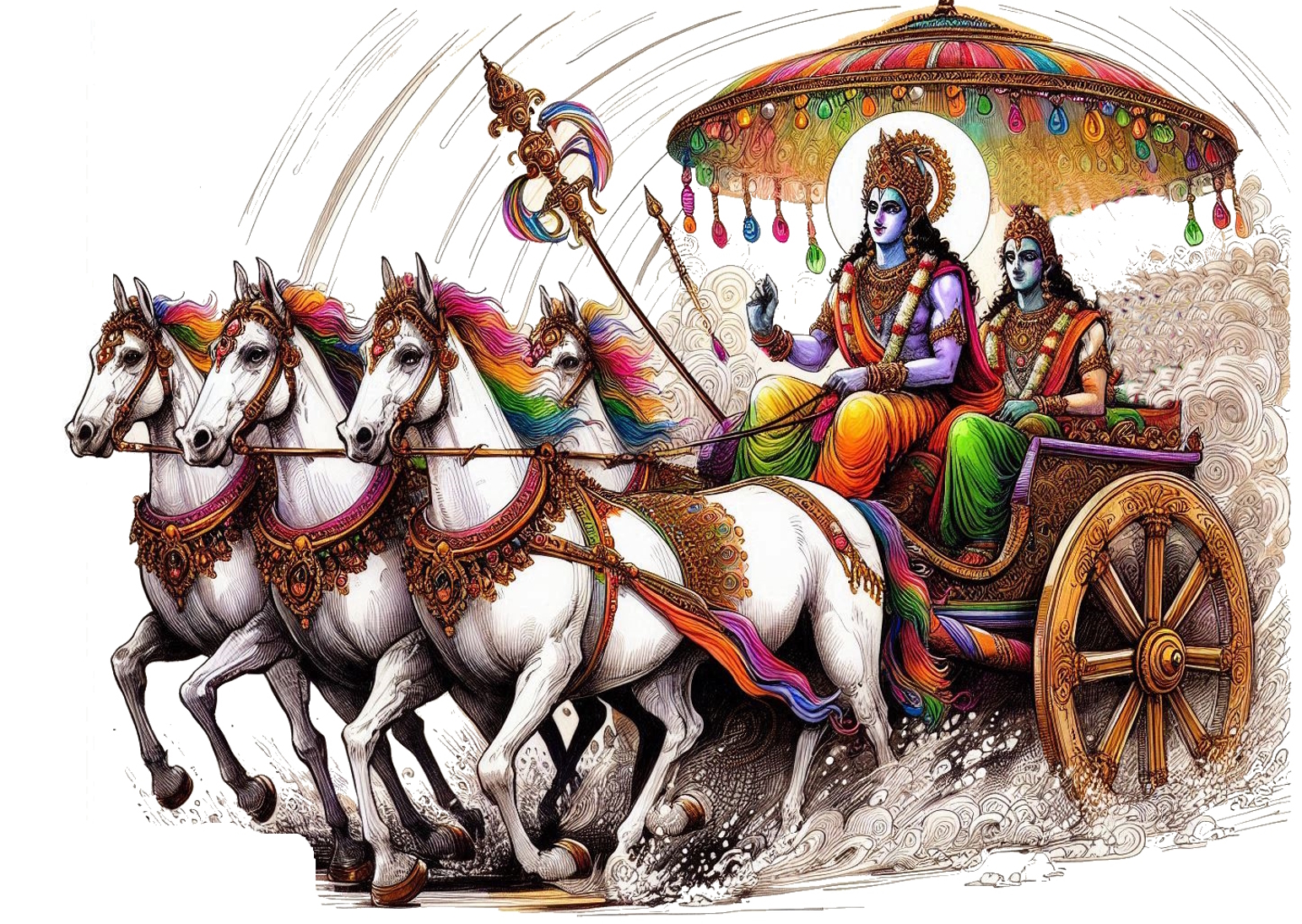
One who is not attracted to or averse to anything is renounced forever. It is immature to think Samkhya (path of knowledge) and yoga (path of performing action disinterested) as separate. The true realization is that goal and outcome of both are the same. Renunciation without performance of karma is tough. On the other hand, those who are purified through karma yoga never get bound by that karma. A self-realized yogi remains in the experience of not doing anything, even while indulging in all forms of karma. The results of actions don’t bind those who renounce attachment to them – like the water cannot wet a lotus leaf always lying in it. Karma binds those who performs them with desires and motives.
(Chapter 5; Verses 1-13)
Iswara doesn’t create karma, doership nor the bondage with its results. They evolve from the inherent nature of objects. We the beings get this wrong, due to our ignorance. The supreme Self shines like the Sun within those whose ignorance is dispelled by the self-realization. Those, whose mind, intellect, soul, actions and goal is established in ‘that’, get liberated from the cycle of births and deaths.
(Chapter 5; Verses 14-17)
Such enlightened one views everything equally, and the one established in such an equality view have succeeded in this life. Such person doesn’t overtly rejoice or grieves about anything, but enjoys the unending, unchanging joy within, available only those who have renounced the sensory cravings. The wise ones don’t rejoice in the sensory pleasures which are transient and leading to grief. One who is able to withstand the forces of lust and anger at their roots is a Yogi and a truly joyful human.
That Yogi, whose happiness is within, who is rejoicing in the light within, achieve that absolute freedom and joy, achieving the realm of Brahman. To such a practitioner, the absolute freedom of Brahman is available anytime, anywhere. Turning inwards from the external subjects through spiritual practices, they progress towards the supreme goal of liberation.
Knowing Me as the ultimate goal of all yajnas and tapas, lord of all worlds and the ally of all beings, a Yogi attains eternal peace.
(Chapter 5; Verses 18-29)
Krishna makes it clear in this chapter that the meaning of Karma Sanyasa is not the traditional way we use for paths of physical renunciation. He makes it clear that the renunciation of attachment to the results of karma is the prescribed Karma Sanyasa, and not the renunciation of the karma itself, and in that sense, there is no difference between Karma Yoga and Karma Sanyasa.
Krishna also highlights the equality view of everything as well as the ability to withstand the forces of lust and anger as characteristics of a Yogi in this chapter.